Reptile Pet Care Guide: How to Build the Perfect Habitat for Your Reptile
reptile enclosure, reptile habitat, reptile terrarium, reptile supplies
Introduction: Why a Proper Reptile Habitat Matters
Reptiles such as snakes, lizards, turtles, and geckos have become increasingly popular pets worldwide. Unlike cats or dogs, reptiles rely heavily on their environment to regulate body temperature, humidity, and overall health.
Creating a well-designed reptile habitat is the foundation of responsible reptile care. A high-quality enclosure, combined with the right accessories, can significantly improve your reptile’s comfort, behavior, and lifespan.
📷 Image Suggestion:
Hero image – A modern acrylic or glass reptile enclosure with natural décor.
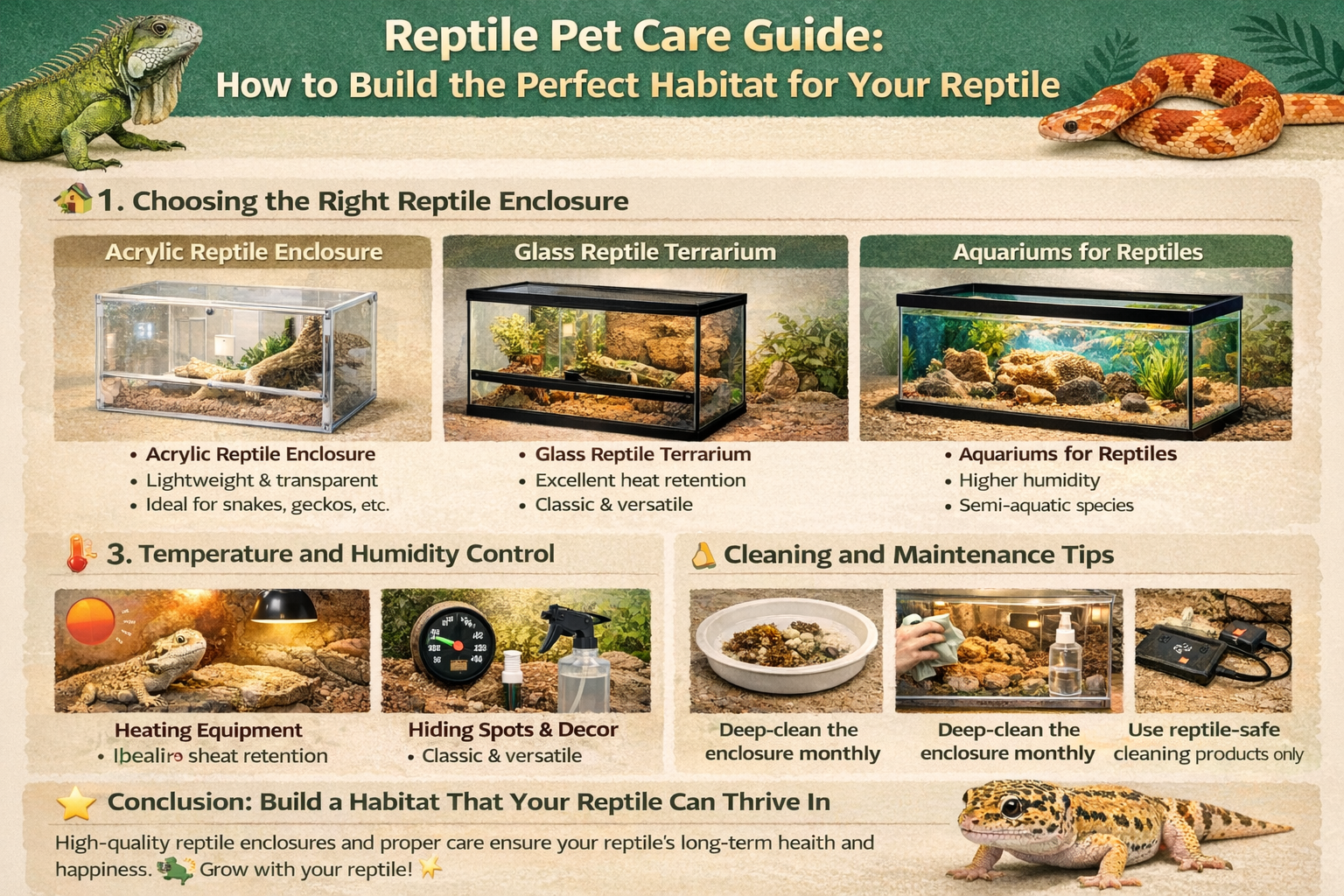
1. Choosing the Right Reptile Enclosure
The enclosure is the core of any reptile habitat. Selecting the right material and size is essential.
Acrylic Reptile Enclosures
Lightweight and highly transparent
Easy to clean and maintain
Ideal for snakes, geckos, spiders, and small reptiles
Glass Reptile Terrariums
Excellent heat retention
Suitable for reptiles that require stable temperatures
Classic and widely used in professional setups
Aquariums for Reptiles
Best for species that require higher humidity
Often used for semi-aquatic reptiles
💡 Tip: Always choose an enclosure large enough to allow movement, hiding, and temperature zoning.
📷 Image Suggestion:
Comparison image – Acrylic vs glass reptile enclosures.
2. Essential Reptile Supplies for a Healthy Habitat
A complete reptile setup goes beyond the enclosure itself.
Must-Have Reptile Accessories:
Heating equipment: heat mats, ceramic heaters, or basking lamps
Hiding spots: caves, shelters, or decorative rocks
Substrate & humidity tools: water bowls, misting systems, hygrometers
High-quality reptile supplies help reduce stress, improve feeding behavior, and prevent health issues.
📷 Image Suggestion:
Flat lay image – Reptile accessories arranged neatly (hide, water bowl, thermometer).
3. Temperature and Humidity Control
Reptiles are cold-blooded animals, meaning they depend on external heat sources.
Key Environmental Principles:
Temperature gradient: warm zone + cool zone
UVB lighting: essential for calcium absorption in many reptiles
Humidity balance: varies by species (snakes vs tropical lizards)
Using thermostats and digital hygrometers ensures a stable and safe environment.
📷 Image Suggestion:
Diagram image – Temperature zones inside a reptile terrarium.
4. Cleaning and Maintenance Tips
Proper maintenance keeps your reptile healthy and your enclosure hygienic.
Remove waste and leftover food weekly
Deep-clean the enclosure monthly
Use reptile-safe cleaning products only
A clean habitat reduces bacteria growth and prevents common reptile diseases.
📷 Image Suggestion:
Lifestyle image – Hands cleaning an acrylic reptile enclosure.
Conclusion: Build a Habitat That Your Reptile Can Thrive In
A well-designed reptile enclosure is more than a container—it is a complete living system. By choosing the right terrarium, reliable reptile supplies, and maintaining stable temperature and humidity, you create a safe and stress-free environment for your reptile.
Whether you are a beginner or an experienced reptile keeper, investing in professional-quality reptile habitats will ensure long-term health and happiness for your pet.
Contact
Should you have any queries, please do not hesitate to contact us.
Phone Number
johnning467@gmail.com
+86-157-7866-2636
Company Address
Unit 201, Building 2 Yunjing Technology Park Hengli Town Dongguan City Guangdong Province China